Laudatio
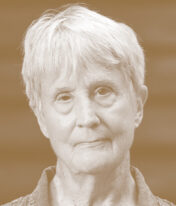
For a very long time, human beings have been accustomed to seeing the world in terms of oppositions. Today, for instance, many politicians across the globe, act as if gender is solely a matter of two biologically defined possibilities. If we were to do Donna Haraway’s rich and wide-ranging oeuvre injustice and reduce it to a single theme, then a good candidate would be her radical critique of binaryoppositions. The male/female opposition, and related dichotomies like human/animal, organism/machine, material/non-material, nature/culture, primitive/civilized, public/private, fact/fiction, andgood/evil, are picked up by Haraway, held up to the light, carefully criticized and deconstructed, opening new connections and possibilities. Haraway gained international fame with her Cyborg Manifesto: Science, Technology, and Social-Feminism in the Late Twentieth Century. In this visionary essay, she focuses on the impact invasive technologies have on the lives of women. In doing so, she criticizes male dominance in science and shows how the production of knowledge reflects a white, male, heterosexual ideology. However, she does not stop there. Branches of feminism that remain stuck in binary oppositions are scrutinized by her, too. Solely reversing existing hierarchical orderings would lead to nowhere, as one would remain stuck in a form of identity politics, based on essentialist identities. In the Manifesto the cyborg plays a triple role. First, ‘cyborg’ refers to fictional characters in contemporary science-fiction novels and films, such as Blade Runner and Terminator. Second, Haraway uses this figure to show how the integration of humans and machines has become reality.
Now, forty years after the publication of the Cyborg Manifesto, we experience this daily: when we use a smartphone toorganize our lives, when we see how BigTech uses our thoughts and actions as input for data-mining AIs, or when human-drone cyborgs sow death and destruction in Ukraine, Gaza and many other battlefields across the world. Third, the cyborg functions as a metaphor for all hybrids that destabilize the aforementioned rigid oppositions and dichotomies. As both organism and machine, fact as well as fiction, good as well as evil, the cyborg is post-gender. As such, the cyborg also creates new connections between previously marginalized positions and makes room for multiple views of reality. Since the publication of her Manifesto, the life sciences, social sciences and humanities offer overwhelming support for the undoing of these binary oppositions. She truly has been a pioneer, indeed.
Hybridity also characterizes Haraway’s interdisciplinary method. She connects history, philosophy of science and technology with feminism, science fiction and personal experience. Her work is characterized by a joyful ironic and humorous style, making her books and essays, as well as her lectures, talks and workshops, events in and of themselves. Wit is a powerful weapon. Wit mobilizes. Haraway has inspired generations of scholars, students, artists, activists and designers with her wit. Haraway, who triple-majored in philosophy, literature and zoology, and who holds a doctoral degree in cell biology, teaches us that scientific knowledge is always connected to the social, cultural, political,and historical and bodily context of the person who produces knowledge. That, however, does not mean that she is a relativist claiming that all knowledge has the same truth-value. There is a real world out there which we can know, but our knowledge of it is always situated.
Haraway doesn’t deny that there are real existing oppositions in thinking and in acting. What she denies is that they are permanent. They are contingent, historical, and ambiguous. That is to say: possible, but not necessary, real but not fixed, and having multiple often contradicting connotations. This creates space for political action. Real objectivity, she maintains, is not achieved by pretending to be neutral, but by acknowledging one’s own position and limitations and being accountable for them. With the turn of the millennium, her field of inquiry expanded even further. In books such as The Companion Species Manifesto, When Species Meet, and Staying with the Trouble, Haraway broadens her focus from cyborgs to all relationships between humans and other non-human beings. We are all living, becoming and creating together in various forms of symbiosis and sympoiesis.
No species, including human beings, live in isolation from other beings. Like all other species, human beings are part of the holobiont we call Earth. Human beings are in no way exceptional, unless we want to express that all species are exceptional in their own way. What we have to learn is something we call: response-ability, that is both learning to respond to other living beings and doing this in a responsible way. Only through multispecies flourishing, we will survive the many ecological troubles we are currently facing, such as global warming, resource depletion, pollution and extinction. It’s all about making kinwith other species, plants, animals, fungi and bacteria, instead of solely bringing forth babies of our own kind. To paraphrase Lynn Margulis, a predecessor of Haraway, Mother Earth is ‘a tough bitch.’ Companion species eat and are being eaten. Life becomes about who lives and who dies and in which way, this kinship rather than that one. Try to stay with the trouble, Haraway encourages us. Stay in the here and now, do not look back in nostalgia on a paradise that was never there in the first place. And do not set your hope on future technological fixes. Technology will not create paradise on earth. To stay with the trouble means to go beyond the opposition of blind technological optimism and apocalyptic doom-mongering. Be here, be aware, be responsible.
The Erasmus Prize derives its name from the Dutch humanist scholar Desiderius Erasmus. It is awarded annually to a person or institution that has made an exceptional contribution to the humanities, the social sciences or the arts, in Europe and beyond.
It is without a doubt that Donna Haraway is such a remarkable scholar, someone who has made an exceptional contribution to the humanities and social sciences. That this prize is awarded in the spirit of its namesake, and thus in the spirit of the humanist tradition, may cause some to raise the eyebrows. And it is true that Haraway herself has challenged the idea that in this ‘dangerously troubled multispecies world’ redemption will come from humanism. But it is equally true that Haraway, contrary to what some of her interpreters have wished to highlight, explicitly claims that she is not a posthumanist.
Here again, Haraway is beyond a simple dichotomy. Neither humanist, nor posthumanist: where then, do we find her? Well, at the table perhaps, together with her companion species, eating bread. Or should we rather say: in her garden? ‘I am a compostist, not a posthumanist’, she once wrote. We, inhabitors of this terrapolis, are all compost. None of us is posthuman. The very root of the word ‘human’, Haraway reminds us, runs back to the word ghem, meaning earth, humus. We are all rich, full of stories, composting ideas and narratives within us, carrying a well of humus. We are all ripe for storytelling. Human beings are no gods, we’re earthly beings. We are not alone; we are one among many. Perhaps that is why Rusten Hogness, Haraway’s partner, has once suggested to replace humanities with humusities. Picking up that thread, let us speak of humusism, instead of humanism. After all, creative language is politics by other means.
Dear Donna, in light of our remarkable ‘humusist’ achievements and your inspiring and encouraging message that it is never too late to make the world a better place, it gives me great pleasure to convey to you, on behalf of the Board of the Erasmus Prize Foundation, our warmest congratulations on being awarded the Erasmus Prize 2025.